How to Increase Website Conversion Rate in 2026

William Tan
William Tan is a Digital Marketer at Crafium,…

In this article
Increasing your website conversion rate means turning more visitors into customers, leads, or subscribers without increasing traffic.
You can improve conversions by optimizing your website design, improving page speed, using strong calls-to-action, building trust, and creating better user experiences. Even small improvements in conversion rate can significantly boost revenue and business growth.
In today’s competitive digital landscape, simply attracting visitors is not enough. Businesses must focus on conversion rate optimization (CRO) to maximize the value of their existing traffic.
Whether you’re running an eCommerce store, blog, or business website, optimizing your conversion rate helps you increase sales, generate leads, and grow faster.
This complete guide covers 15 proven strategies to increase website conversion rate, improve user engagement, and outperform competitors in search rankings.
What is Website Conversion Rate?
Website conversion rate is the percentage of visitors who complete a desired action on your website. These actions include:
- Making a purchase
- Signing up for a newsletter
- Filling out a form
- Downloading a resource
- Creating an account
Conversion Rate Formula
Conversion Rate = (Conversions / Total Visitors) × 100
Example:
If 1000 visitors come to your website and 50 make a purchase:
Conversion Rate = (50 / 1000) × 100 = 5% Conversion Rate
Why Increasing Website Conversion Rate Is Important
Improving your website’s conversion rate isn’t just a “nice-to-have” metric—it’s one of the most powerful growth levers in digital business.
Instead of constantly chasing more traffic, conversion optimization helps you extract more value from the visitors you already have, making your entire marketing system more efficient and profitable.
i. More revenue without more traffic
Driving traffic is expensive and time-consuming. Whether you’re investing in SEO, ads, or social media, every visitor has a cost. When your conversion rate increases, you generate more leads or sales from the same traffic, effectively lowering your customer acquisition cost.
For example, if your website converts at 2% and you improve it to 4%, you’ve essentially doubled your revenue without spending an extra dollar on marketing.
ii. Higher return on marketing investment (ROI)
Every campaign becomes more profitable when your conversion rate improves. Paid ads perform better, email campaigns generate more results, and organic traffic becomes more valuable.
Instead of scaling ad spend blindly, conversion rate optimization ensures that every click has a higher chance of turning into revenue, which is crucial for sustainable growth.
iii. Better user experience (UX)
Conversion rate optimization is deeply tied to user experience. When you improve conversions, you’re usually fixing things like:
- Slow loading pages
- Confusing navigation
- Weak messaging
- Poor mobile experience
This leads to a smoother, more enjoyable journey for users, which not only boosts conversions but also builds trust and brand perception.
iv. Stronger competitive advantage
Most websites focus heavily on traffic but ignore conversion. This creates an opportunity: if your competitors are converting at 2% and you reach 5%, you can outperform them, even with less traffic.
In competitive niches like SaaS, e-commerce, or directories, conversion rate becomes your unfair advantage.
v. More data-driven growth
When you optimize conversions, you start understanding:
- What messaging resonates
- Which offer converts best
- Where users drop off
This data helps you make smarter decisions across your entire business, from product development to marketing strategy.
vi. Scalable business growth
Traffic growth has limits. Conversion optimization, however, compounds over time. Small improvements, like better headlines, stronger CTAs, or optimized layouts, can lead to massive long-term gains.
It’s one of the few strategies where incremental changes produce exponential results.
vii. Improved customer quality
Higher conversion rates often mean you’re attracting and converting the right audience. By refining your messaging and targeting, you filter out low-quality visitors and attract users who are more likely to engage, buy, or stay loyal.
15 Proven Ways to Increase Website Conversion Rate
Conversion rate optimization isn’t about random tweaks it’s about understanding user psychology friction points and decision triggers. Below are 15 proven strategies each explained deeply so you can actually implement and win.
1. Craft a clear, benefit-driven headline
Your headline is your first and sometimes only chance to hook a visitor. Most users decide within seconds whether to stay or leave so clarity beats cleverness every time. Instead of vague or generic messaging focus on the specific outcome your user will get.
A strong headline answers what do I get how fast why should I care. Pair it with a supporting subheadline that removes doubt and adds context. This instantly reduces bounce rate and sets the tone for conversion.
2. Optimize your call to action CTA
Your CTA is where conversions happen so every word and design element matters. Weak CTAs create hesitation while strong ones create momentum. Instead of passive language use action driven outcome focused phrases that align with user intent.
Design also plays a role your CTA should stand out visually without overwhelming the page. Placement is critical too above the fold mid content and at the end. The goal is to ensure users never have to search for the next step.
3. Improve page load speed
Speed directly impacts user behavior. A slow website increases frustration reduces trust and causes drop offs before users even see your offer. Optimizing speed isn’t just technical it is directly tied to revenue.
Compress images use lightweight design frameworks minimize scripts and leverage caching. Faster load times create a smoother experience which keeps users engaged long enough to convert.
4. Use social proof strategically
People trust people more than brands. Social proof reduces uncertainty and reassures users that they are making the right decision. But random testimonials are not enough you need relevant and specific proof.
Use case studies that show real results testimonials that highlight transformation and metrics like thousands of users or trusted by top brands.
Place them near decision points like CTAs to reinforce confidence at the moment it matters most.
5. Simplify your design
Complex design increases cognitive load, making it harder for users to decide what to do next. A clean minimal layout guides users naturally toward your conversion goal.
Focus on visual hierarchy headlines should stand out CTAs should be obvious and unnecessary elements should be removed. Every section should serve a purpose. When users feel clarity they take action faster.
6. Create a strong value proposition
Your value proposition is the core reason someone should choose you over competitors. If it is unclear or generic users will leave. It needs to communicate what makes you different and why it matters.
Break it down into simple digestible points. Highlight benefits not just features. Show how your solution solves a specific problem better or faster. This builds immediate relevance and increases conversion likelihood.
7. Add urgency and scarcity
Humans are naturally driven by fear of missing out. When there is no urgency users delay decisions or forget altogether. Adding urgency encourages immediate action.
Use limited time offers countdown timers or limited availability messaging. Authenticity is key fake urgency can damage trust. When used correctly urgency increases conversions significantly.
8. Optimize for mobile users
Mobile traffic dominates most websites today yet many sites still provide a poor mobile experience. Small buttons slow loading and cluttered layouts reduce conversions.
Design for mobile first large tap targets simple navigation fast load times and concise content. A seamless mobile experience ensures you do not lose a huge portion of potential conversions.
9. Use high quality visuals
Visuals influence perception instantly. Low-quality images or generic stock photos reduce credibility while high-quality visuals build trust and engagement.
Use product demos explainer videos or real-life usage images. Visual storytelling helps users understand your offer faster and creates emotional connection which directly impacts conversions.
10. Reduce form friction
Forms are often the final step before conversion so any friction here can cause drop-offs. Long or complicated forms feel like work and discourage users.
Ask only for essential information. Use multi-step forms if necessary to make the process feel lighter. Adding autofill and clear labels can also improve completion rates significantly.
11. A/B test everything
What works for one audience may not work for another. A B testing allows you to make data-driven decisions instead of relying on assumptions.
Test headlines CTAs layouts colors and even pricing strategies. Small improvements compound over time leading to significant conversion gains. Continuous testing is the key to long-term optimization.
12. Build trust with clear messaging
Trust is a major factor in conversion. If users feel uncertain or skeptical they will not take action. Your messaging should remove doubts and build credibility.
Include guarantees transparent pricing clear policies and security badges. The more confident users feel the more likely they are to convert.
13. Use exit intent popups smartly
Not all visitors convert on their first visit. Exit intent popups give you a second chance to capture attention before they leave.
Offer something valuable like a discount free resource or exclusive access. When done right this can recover a significant percentage of lost conversions without harming user experience.
14. Align content with user intent
If your content does not match what users are looking for they will leave quickly. Understanding user intent helps you deliver exactly what they expect.
For example, a visitor searching for the best directory app builder expects comparisons features and benefits not just a sales pitch. Aligning content with intent increases engagement and conversion rates.
15. Use clear navigation and flow
Users should never feel lost on your website. A confusing navigation structure creates frustration and drop offs.
Guide users with a logical flow from awareness to consideration to conversion. Each page should naturally lead to the next step. When the journey feels effortless conversions increase.
Turn More Visitors into Leads with OptinCraft
Most websites do not have a traffic problem they have a conversion problem. You can spend months driving visitors through SEO ads or social media but if you are not capturing those visitors you are leaving serious revenue on the table. This is exactly where OptinCraft changes the game.
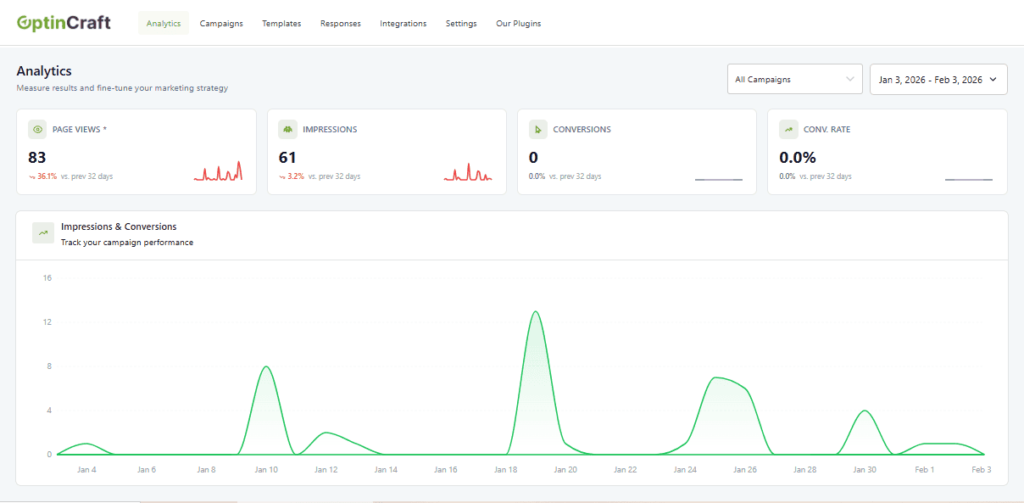
OptinCraft is built for one purpose to convert your existing traffic into leads subscribers and customers effortlessly. Instead of relying on generic popups or outdated forms it gives you high-converting opt in experiences that feel natural timely and impossible to ignore.
What makes OptinCraft powerful is how intelligently it works behind the scenes. You can trigger offers based on real user behavior like exit intent scroll depth or time on page so your message appears exactly when your visitor is most likely to take action. No guesswork no interruption just perfectly timed conversion opportunities.
It is not just about capturing emails either. OptinCraft helps you build a full conversion engine with smart popups that do not annoy users lead magnet funnels that actually convert high-performing CTAs designed for action and seamless integration into your existing website flow.
Whether you are running a blog SaaS directory or ecommerce site OptinCraft transforms passive visitors into engaged leads without slowing down your site or hurting user experience.
The best part is you do not need to be a marketer or developer to make it work. Everything is designed to be simple fast and optimized out of the box so you can focus on growth instead of technical setup.
If you are serious about increasing your conversion rate the question is not whether you need a tool like this it is how much opportunity you are losing without it.
Start turning every visitor into a potential customer with OptinCraft.
Final Thoughts: How to Increase Website Conversion Rate
Increasing your website conversion rate is one of the most effective ways to grow your business online. Instead of spending more money on traffic, focus on optimizing your website to convert more visitors into customers.
By implementing the strategies in this guide, improving user experience, optimizing landing pages, using strong CTAs, and building trust, that you can significantly boost conversions and outperform competitors.
Start optimizing today and turn your website into a powerful conversion machine.
Frequently Asked Questions (FAQs)
What is a good website conversion rate?
A good website conversion rate typically ranges between 2% to 5%, but high-performing websites can achieve 10% or more depending on the industry.
Why is my website getting traffic but no conversions?
Possible reasons include:
Poor website design
Weak CTA
Slow loading speed
Lack of trust signals
What is CRO in digital marketing?
CRO stands for Conversion Rate Optimization. It involves improving website elements to increase conversions.
How do I calculate conversion rate?
Conversion Rate = (Conversions / Visitors) × 100
Share this blog:

About William Tan
William Tan is a Digital Marketer at Crafium, specializing in WordPress solutions and online growth strategies. He’s passionate about helping businesses expand their digital presence through smart marketing and data-driven insights.