E-commerce Conversion Rate Optimization: 15 Proven Strategies to Increase Sales Fast

Md Hamim Khan
Md. Hamim Khan is the Co-Founder and CEO…
In this article
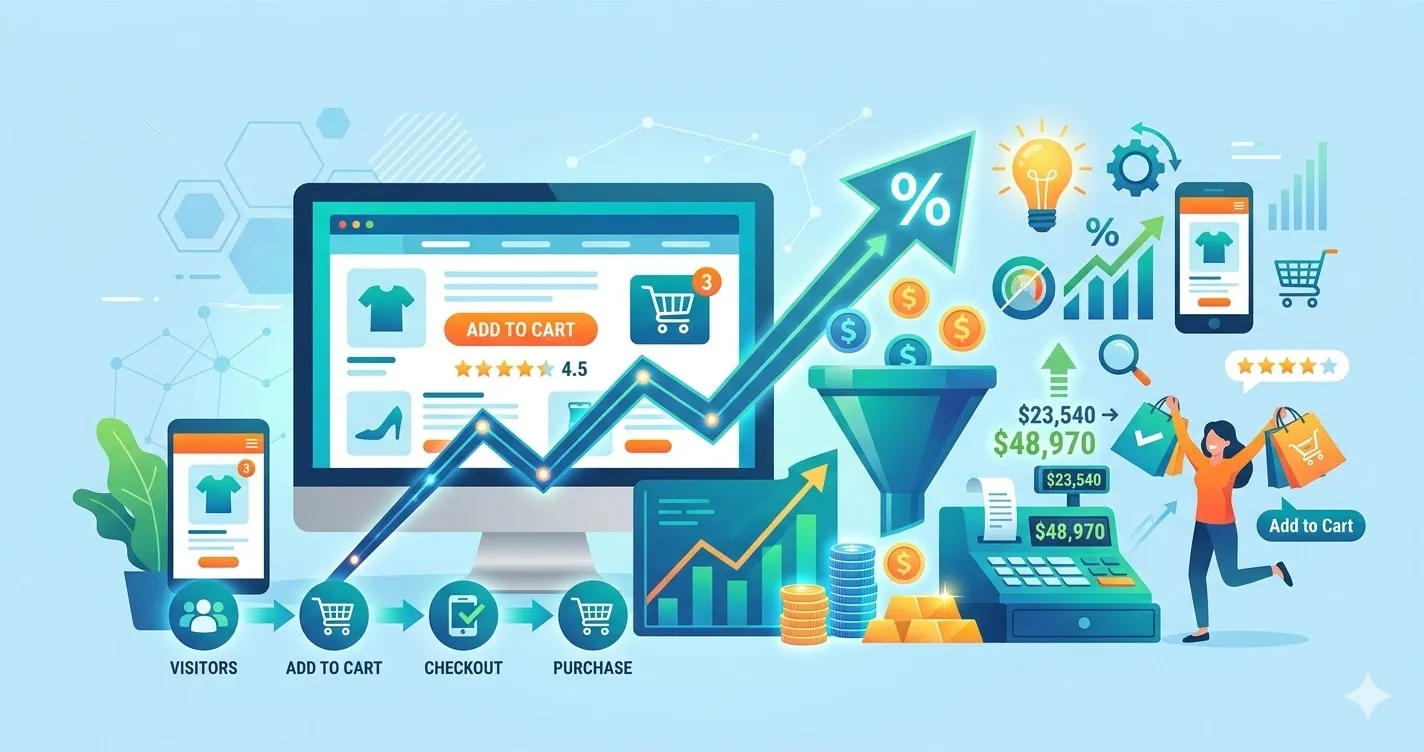
E-commerce conversion rate optimization (CRO) is the process of improving your online store to increase the percentage of visitors who complete a desired action, such as purchasing a product.
Instead of spending more money on advertising or traffic generation, CRO focuses on optimizing the user experience so that more visitors convert into customers.
For modern online businesses, conversion optimization is one of the most powerful growth strategies. Even a small increase in conversion rate can significantly boost revenue without increasing marketing costs.
By improving elements like product pages, website speed, checkout flow, and trust signals, businesses can transform their website into a high-converting sales engine.
In this guide, you will discover 15 proven e-commerce conversion rate optimization strategies used by successful online stores to increase sales, reduce cart abandonment, and maximize the value of every website visitor.
What is E-Commerce Conversion Rate Optimization?
E-Commerce conversion rate optimization refers to the process of improving an online store so that a higher percentage of visitors complete a purchase.
A conversion can include actions such as
- Purchasing a product
- Signing up for a newsletter
- Adding items to a shopping cart
- Creating a customer account
The goal of CRO is to reduce friction and improve the customer journey, making it easier for shoppers to move from browsing products to completing purchases.
For example, improving product descriptions, speeding up website loading times, and simplifying checkout can significantly increase conversions.
What Is a Good E-Commerce Conversion Rate?
The average conversion rate for e-commerce websites typically falls between 2 percent and 4 percent. However, high-performing stores can achieve conversion rates of 5 percent or higher through continuous optimization.
Conversion rates depend on several factors, including:
- Industry niche
- Website usability
- Product pricing
- Brand reputation
- Marketing strategy
Businesses that actively focus on conversion rate optimization often outperform competitors that only focus on traffic growth.
E-Commerce Conversion Rate Optimization Statistics
Data-driven insights show why CRO is critical for online businesses.
Studies show that nearly 70 percent of online shopping carts are abandoned before checkout, meaning a large portion of potential sales is lost due to poor user experience or checkout friction.
According to research from BigCommerce, the average cart abandonment rate across e-commerce sites is around 70 percent.
According to research from the Baymard Institute, the average cart abandonment rate across e-commerce websites is approximately 69.99 percent, highlighting the importance of optimizing the checkout experience.
Research also shows that improving website speed by just one second can significantly increase conversions. Faster websites create smoother user experiences and encourage shoppers to complete purchases.
Another studies analyzing billions of page views show that reducing page load time by one second can increase conversion rates by more than 5 percent on mobile and over 3 percent on desktop devices.
Additionally, websites that include customer reviews and social proof often experience higher conversion rates because they build trust with potential buyers and reduce hesitation during the purchasing process.
Studies show that 93 percent of consumers read online reviews before making a purchase, making customer feedback one of the most powerful drivers of e-commerce conversions.
These statistics highlight how small improvements in user experience can lead to major revenue gains for e-commerce businesses.
Why Conversion Rate Optimization Matters for Online Stores
Many e-commerce businesses focus heavily on driving traffic but overlook the importance of optimizing their conversion rates.
If your store receives 10,000 visitors each month and converts only 1 percent of them, you generate 100 sales. However, increasing the conversion rate to just 2 percent doubles your revenue without increasing traffic.
Conversion rate optimization helps online stores:
- Increase revenue without increasing marketing spend
- Improve customer experience
- Reduce cart abandonment
- Build stronger trust with buyers
- Generate better ROI from existing traffic
Because of these benefits, CRO has become one of the most important growth strategies in modern e-commerce.
15 E-Commerce Conversion Rate Optimization Strategies That Work
1. Improve website speed
Improving website speed is one of the most effective e-commerce conversion rate optimization strategies. Fast-loading pages create better user experiences and reduce bounce rates. Studies show that even a one-second delay in page loading time can significantly decrease conversions and increase cart abandonment.
2. Use high-quality product images
High-quality product images help customers clearly understand what they are purchasing. Multiple angles, zoom features, and lifestyle photos improve product visualization and build buyer confidence. Clear product visuals are essential for increasing trust and improving conversion rates in online stores.
3. Write persuasive product descriptions
Persuasive product descriptions highlight benefits instead of only listing features. By explaining how a product solves a customer’s problem, descriptions become more engaging and convincing. Clear and informative product content helps shoppers make confident purchasing decisions.
4. Add customer reviews and social proof
Customer reviews and testimonials build trust and credibility for online stores. When potential buyers see positive feedback from other customers, they feel more confident purchasing the product. Social proof is one of the most powerful factors influencing e-commerce buying decisions.
5. Optimize call-to-action buttons
Call-to-action buttons guide visitors toward completing purchases. Buttons like “Add to Cart” or “Buy Now” should be clearly visible and easy to click. Using contrasting colors and strong action words helps attract attention and improve conversion rates.
6. Simplify the checkout process
Simplifying the checkout process reduces friction and encourages customers to complete purchases. Removing unnecessary form fields, enabling guest checkout, and minimizing steps can significantly reduce cart abandonment and increase overall conversion rates.
7. Offer multiple payment options
Offering multiple payment options improves convenience for customers and increases purchase completion rates. Providing credit cards, digital wallets, and alternative payment methods allows shoppers to choose their preferred option, making the checkout process smoother.
8. Use trust badges and security signals
Trust badges and security icons reassure customers that their personal information is protected. Displaying secure payment symbols, SSL certificates, and money-back guarantees increases buyer confidence and encourages visitors to complete purchases.
9. Create urgency and scarcity
Urgency and scarcity techniques encourage customers to act quickly. Limited-time discounts, flash sales, and low stock alerts create a sense of urgency that motivates shoppers to complete their purchases before missing the opportunity.
10. Optimize for mobile shopping
Mobile optimization is essential for modern e-commerce stores because a large percentage of shoppers browse and buy using smartphones. Responsive design, fast loading pages, and simple navigation improve the mobile shopping experience and increase conversion rates.
According to Statista, mobile devices generate over 60 percent of global e-commerce traffic, making mobile optimization essential for improving conversion rates.
11. Show transparent shipping costs
Transparent shipping information builds trust with customers. Clearly displaying shipping costs and delivery times before checkout prevents unpleasant surprises and reduces cart abandonment during the purchasing process.
12. Provide live chat support
Live chat support helps customers resolve questions instantly while shopping. Quick assistance improves customer confidence and can guide visitors through the buying process, increasing the likelihood of completing a purchase.
13. Personalize the shopping experience
Personalization improves user engagement by recommending products based on browsing history or previous purchases. Tailored product suggestions make the shopping experience more relevant and increase the chances of converting visitors into customers.
14. Reduce distractions on product pages
A clean product page design helps visitors focus on the product and purchase decision. Removing unnecessary popups, excessive navigation, and distractions improves the user experience and increases conversions.
15. Run A/B testing regularly
A/B testing allows businesses to experiment with different page elements such as headlines, layouts, or images. By comparing variations, companies can identify which design or content performs better and continuously improve conversion rates.
Common E-Commerce CRO Mistakes to Avoid
Many online stores struggle with low conversions because of common mistakes.
These include slow websites, confusing navigation, hidden shipping costs, poor product descriptions, and complicated checkout processes.
Ignoring mobile optimization is another major mistake that can significantly reduce conversion rates.
Avoiding these issues is essential for improving overall store performance.
Best Tools for E-Commerce Conversion Rate Optimization
Several tools can help analyze visitor behavior and identify areas for improvement.
Popular CRO tools include:
- Google Analytics for tracking visitor behavior
- Hotjar for heatmaps and user recordings
- Optimizely for A/B testing
- Crazy Egg for visual analytics
- Shopify analytics for store performance insights
Using these tools helps businesses make data-driven optimization decisions.
Powerful Tool for E-Commerce Conversion Rate Optimization on WordPress
Optimizing an e-commerce store often requires the right tools to capture leads, reduce cart abandonment, and convert visitors into customers. While many CRO tools exist, WordPress users benefit most from solutions designed specifically for their platform.
One of the most effective solutions for improving conversions on WordPress websites is OptinCraft, a powerful popup and conversion optimization plugin designed to help businesses capture leads and increase engagement.
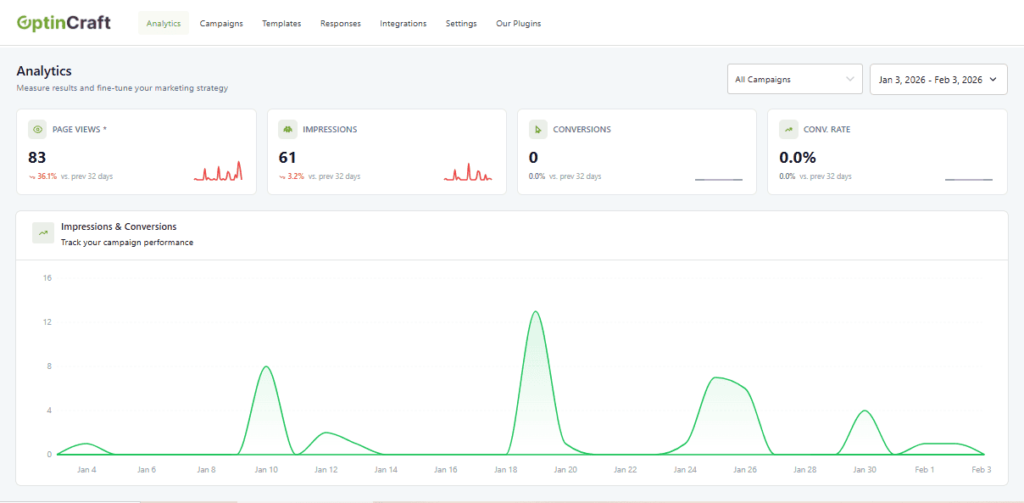
Unlike generic popup builders, OptinCraft focuses on conversion-driven campaigns that encourage visitors to take action at the right moment.
Why OptinCraft is a powerful CRO tool for WordPress
OptinCraft helps website owners create targeted campaigns that convert visitors into subscribers and customers.
The plugin is built specifically to improve website conversion rates through smart popup strategies and user behavior targeting.
With OptinCraft, businesses can create popups that appear based on user behavior, timing, or exit intent, ensuring visitors see the right message at the right moment.
This makes it an effective tool for:
• Reducing cart abandonment
• Growing email subscriber lists
• Promoting limited-time offers
• Increasing product page engagement
• Converting website visitors into customers
Key features that make OptinCraft ideal for CRO
1. Exit-Intent Popups
Exit-intent popups detect when a visitor is about to leave your website and display a targeted offer. This strategy can significantly reduce bounce rates and recover potential lost sales.
2. Smart Targeting Rules
OptinCraft allows you to show popups based on visitor behavior, device type, or specific pages. This ensures users see highly relevant messages that improve engagement and conversion rates.
3. Conversion-Focused Templates
The plugin provides professionally designed popup templates optimized for lead generation and sales campaigns.
These templates help businesses launch conversion campaigns quickly without needing design experience.
4. Lightweight and Performance Friendly
Unlike many popup plugins that slow down websites, OptinCraft is designed to be lightweight and fast. Maintaining website speed is essential because slow websites negatively impact conversion rates.
How OptinCraft improves e-commerce conversion rates
When used strategically, OptinCraft can help online stores increase conversions by capturing visitor attention at key moments in the customer journey.
For example, an exit-intent popup offering a limited-time discount can encourage visitors who are about to leave the site to complete their purchase.
Similarly, newsletter subscription popups help businesses grow their email lists, enabling them to re-engage potential customers with promotions and product updates.
By combining smart targeting, optimized designs, and behavioral triggers, OptinCraft becomes a powerful tool for improving overall e-commerce performance.
Conclusion
E-commerce conversion rate optimization is one of the most powerful strategies for increasing online store revenue. Instead of focusing solely on generating more traffic, CRO helps businesses maximize the value of their existing visitors.
By improving website speed, optimizing product pages, simplifying checkout processes, and building customer trust, online stores can significantly increase conversions and reduce cart abandonment.
The 15 strategies discussed in this guide provide a practical roadmap for transforming your website into a high-converting e-commerce platform.
Businesses that continuously test and optimize their websites will gain a strong competitive advantage in the rapidly growing digital commerce landscape.
Frequently Asked Questions (FAQs)
Why is my ecommerce conversion rate low?
Low conversion rates are often caused by slow website speed, poor product descriptions, lack of trust signals, or complicated checkout processes.
What are the best ecommerce CRO strategies?
The most effective strategies include product page optimization, mobile optimization, social proof, faster loading speed, and A/B testing.
How do I reduce cart abandonment in ecommerce?
Reducing cart abandonment involves simplifying checkout, offering multiple payment options, displaying shipping costs upfront, and sending reminder emails.
Why is website speed important for ecommerce conversions?
Faster websites create better user experiences and reduce bounce rates, which directly increases conversion rates.
How does social proof increase ecommerce sales?
Customer reviews, testimonials, and ratings build trust and help shoppers feel confident about purchasing.
What is checkout optimization in ecommerce?
Checkout optimization involves simplifying the purchase process to reduce friction and improve the likelihood of completing a transaction.
Does mobile optimization affect ecommerce conversions?
Yes, because a large percentage of online shoppers use smartphones. A mobile- friendly store significantly increases conversion rates.
How do product images impact ecommerce conversions?
High quality product images help customers visualize the product, increasing confidence and purchase likelihood.
What is A B testing in ecommerce?
A B testing compares two versions of a webpage or element to determine which one produces better conversion results.
What tools help with ecommerce conversion optimization?
Tools like Google Analytics, Hotjar, and Optimizely help analyze user behavior and improve conversion rates.
What is the ecommerce conversion funnel?
The conversion funnel represents the steps visitors take from discovering a product to completing a purchase.
How does personalization improve ecommerce conversions?
Personalized recommendations based on browsing behavior increase relevance and encourage purchases.
What are trust signals in ecommerce?
Trust signals include secure payment icons, customer reviews, SSL certificates, and money-back guarantees.
How can product descriptions increase conversions?
Clear and persuasive product descriptions highlight benefits and help customers understand why the product is valuable.
Why is user experience important for ecommerce?
A smooth and intuitive shopping experience makes it easier for customers to find products and complete purchases.
What is CRO testing?
CRO testing involves experimenting with different page elements to identify what improves conversions.
How often should ecommerce stores optimize conversions?
Successful ecommerce stores continuously analyze data and optimize their websites to improve performance.
Share this blog:

About Md Hamim Khan
Md. Hamim Khan is the Co-Founder and CEO of Crafium, leading the company’s vision, growth, and product strategy across its digital and software ventures. With 5+ years of experience in tech and digital marketing, he focuses on building products, driving sustainable growth, and turning ideas into scalable businesses.