Popup Software for Ecommerce: What Converts in 2026

William Tan
William Tan is a Digital Marketer at Crafium,…
In this article
Running an ecommerce store today isn’t just about getting traffic. Shoppers browse, hesitate, and leave without buying more often than you’d like. Cart abandonment, ignored offers, and missed email signups quietly drain your potential revenue every single day.
What makes it worse is that most of these visitors are already interested. They check product pages, compare prices, even add items to cart, then vanish. Without the right nudge at the right moment, you’re losing warm prospects who could have converted with minimal effort.
That’s where popup software for ecommerce comes in. When used strategically, popups help capture leads, recover abandoned carts, highlight timely offers, and guide shoppers toward conversion without disrupting the user experience.
In this article, we’ll explore how the right popup software like OptinCraft, can turn passive visitors into paying customers and loyal buyers. So, without further ado, let’s dig deeper.
Why Ecommerce Stores Lose Conversions
Ecommerce success depends not just on attracting visitors, but on keeping them engaged long enough to take action. Before choosing the right tools or tactics, it’s important to understand why so many potential buyers leave without converting.
Visitors arrive with intent but no direction
Most ecommerce visitors don’t land on a store by accident. They come from ads, search results, or social media with a specific need in mind. The problem starts when the store fails to guide that intent toward a clear next step. Without prompts that highlight value, offers, or urgency, shoppers hesitate, scroll aimlessly, and eventually leave without converting.
Decision fatigue slows down the buying process
Too many choices, unclear pricing structures, or excessive product variations can overwhelm shoppers. When users are forced to think too much, they often choose the easiest option, which is leaving the site. Ecommerce stores that don’t simplify decision-making lose conversions not because of poor products, but because the buying journey feels mentally exhausting.
Distractions pull shoppers away mid-journey
Online shopping rarely happens in isolation. Notifications, open tabs, messages, and real-life interruptions constantly compete for attention. When a shopper steps away even briefly, there’s a high chance they won’t return. Without mechanisms to re-capture attention at key moments, ecommerce stores lose users who were already close to converting.
Lack of timely engagement reduces motivation
Static elements like banners and product descriptions remain the same for every visitor, regardless of behavior. This creates a missed opportunity to respond to user actions in real time. When stores fail to engage shoppers while they scroll, hesitate, or prepare to exit, motivation drops and purchase intent fades.
Trust and urgency are often missing
First-time visitors frequently hesitate due to concerns about credibility, shipping, returns, or value. Returning visitors may need a reminder or incentive to complete a purchase. When ecommerce stores don’t reinforce trust signals or introduce urgency at the right moment, shoppers delay decisions and often never come back.
What Popup Software Really Means for Ecommerce
Popup software in ecommerce is not about showing random discount boxes on a screen. It is a behavioral engagement system designed to respond to how shoppers interact with a store in real time. When used correctly, popups become contextual touchpoints that guide users through the buying journey rather than interrupt it.
Popup software is a behavioral engagement tool
Modern popup software tracks actions such as scrolling, time spent on a page, cart activity, and exit intent. This allows ecommerce stores to display messages only when a visitor shows specific behaviors. Instead of pushing offers blindly, popups appear when they are most likely to be relevant, making engagement feel natural and timely.
It bridges the gap between interest and action
Many shoppers browse with intent but hesitate before committing. Popup software helps close this gap by addressing doubts, reinforcing value, or offering incentives at critical moments. Whether it’s reminding users of free shipping, highlighting limited stock, or offering a first-purchase benefit, popups guide shoppers toward a decision without overwhelming them.
Popup software adapts to different stages of the customer journey
Ecommerce visitors are not all at the same stage. First-time visitors may need reassurance or a welcome offer, while returning users may respond better to urgency or personalized recommendations. Popup software allows stores to tailor messaging based on user type, behavior, and purchase history, ensuring relevance throughout the journey.
It supports revenue growth without hurting user experience
When popups are designed with proper timing, frequency, and intent, they enhance rather than disrupt the shopping experience. Smart popup software prioritizes subtlety and control, allowing ecommerce brands to increase conversions while maintaining a clean, user-friendly interface that builds trust over time.
How Popup Software Solves Key Ecommerce Challenges
Ecommerce stores face multiple challenges, from abandoned carts to low email capture rates. Popup software addresses these pain points by delivering targeted, timely messages that guide users toward conversion while enhancing the shopping experience.
1. It captures leads before visitors leave
One of the biggest challenges is turning anonymous visitors into potential customers. Popup software enables stores to capture emails or contact details using exit-intent or scroll-triggered popups. By engaging users just before they leave, stores can build a mailing list for follow-ups, promotions, and nurturing campaigns.
2. It reduces cart abandonment
Cart abandonment is a major revenue leak in ecommerce. Popups triggered when a shopper hesitates or tries to leave the cart page can remind them of what they’re leaving behind, offer a discount, or reinforce urgency. These timely interventions recover lost sales and prevent missed opportunities.
3. It promotes special offers and upsells effectively
Many visitors may browse without noticing ongoing deals or complementary products. Popup software allows ecommerce stores to display limited-time offers, cross-sells, and upsells exactly when users are most receptive. This increases average order value without cluttering the website or slowing navigation.
4. It personalizes engagement based on behavior
Generic messages rarely convert. Popup software uses behavioral data such as past purchases, pages visited, or traffic source to deliver personalized messages. This makes the shopping experience feel tailored and relevant, boosting conversion rates while building brand trust.
5. It reinforces trust and urgency
Shoppers often hesitate due to concerns about credibility, shipping, or product value. Popups can reassure visitors with trust badges, free shipping reminders, or countdown timers for promotions. By combining social proof with urgency, stores can nudge hesitant users toward completing their purchase.
Types of Ecommerce Popups That Drive Results
Not all popups are created equal. Different types of popups serve specific purposes and perform best at certain stages of the customer journey. Using the right type strategically ensures maximum engagement without annoying shoppers.
- Exit-intent popups capture leaving visitors
Exit-intent popups detect when a user is about to leave the site and display a targeted message. These popups are perfect for reducing bounce rates, offering discounts, or collecting emails from users who might otherwise leave empty-handed.
- Scroll-triggered popups engage active readers
Scroll-triggered popups appear when a visitor scrolls a certain portion of a page. They are effective for users who are already engaged with content, such as blog posts or product descriptions, providing offers or prompts without interrupting the natural browsing flow.
- Cart-triggered popups recover abandoned carts
Cart-triggered popups activate when shoppers show hesitation on the cart or checkout page. They can remind users of items left behind, provide incentives like discounts, or highlight urgency to encourage completion of the purchase.
- Time-delayed popups nurture interested users
Time-delayed popups appear after a visitor has spent a specific amount of time on a page. They are ideal for first-time visitors or browsers who need a gentle push, offering welcome deals, newsletter subscriptions, or helpful guidance to keep them engaged.
- Click-activated popups enhance user control
Click-activated popups appear only when a user takes an action, such as clicking a button or link. These popups are less intrusive and highly targeted, making them ideal for showing product recommendations, special offers, or lead capture forms without disrupting the shopping experience.
Best Practices for Using Popups Without Hurting UX
Popups can boost conversions dramatically, but if misused, they risk annoying visitors and driving them away. Following best practices ensures popups remain helpful, subtle, and user-friendly.
Timing is everything
Displaying a popup too early can feel intrusive, while waiting too long may miss the opportunity. Use triggers like exit intent, scroll depth, or time-on-page to show popups at moments when visitors are naturally engaged or hesitant to leave.
Limit frequency to avoid fatigue
Repeated popups can frustrate users and harm brand perception. Limit how often a popup appears to the same visitor and use smart rules to avoid showing multiple popups simultaneously, maintaining a seamless browsing experience.
Keep design clean and focused
A cluttered popup overwhelms visitors. Focus on a single message or call-to-action per popup, with clear fonts, contrasting buttons, and minimal distractions. A simple, visually appealing design encourages interaction without being disruptive.
Personalize content for relevance
Generic popups are often ignored. Use behavior-based targeting, past purchases, traffic source, or location to show relevant messages. Personalized popups feel helpful rather than pushy, increasing engagement and trust.
Offer value, not annoyance
Every popup should provide a clear benefit whether it’s a discount, free shipping, exclusive content, or helpful guidance. When users perceive value, popups enhance the shopping experience instead of interrupting it.
Test and optimize continuously
A/B testing different messages, designs, and triggers helps identify what resonates with your audience. Continuous optimization ensures popups stay effective while maintaining a positive user experience.
Must-Have Features in Ecommerce Popup Software
Choosing the right popup software is about more than just creating popups. The best tools provide advanced features that maximize engagement, drive conversions, and integrate seamlessly with your ecommerce workflow.
1. Behavior-based triggers for precise engagement
The software should allow popups to appear based on user behavior, such as exit intent, scroll depth, time on page, or cart activity. Behavior-based triggers ensure messages reach the right user at the right moment, increasing relevance and conversion rates.
2. A/B testing and analytics for data-driven decisions
Popups without testing are just guesses. The software should provide A/B testing capabilities and detailed analytics, enabling you to measure performance, compare variations, and optimize campaigns for maximum ROI.
3. Seamless integration with ecommerce platforms
A good popup tool must work smoothly with your store platform like WooCommerce or Shopify. It should support syncing with product pages, checkout flows, and email marketing systems to streamline campaigns.
4. Customizable templates and design flexibility
Flexible design options and ready-made templates save time while maintaining brand consistency. The software should allow easy customization of layout, colors, fonts, images, and call-to-action buttons to match your store’s aesthetic.
5. Personalization and segmentation options
Advanced popup software lets you segment audiences based on behavior, purchase history, or location. Personalized messages make visitors feel understood, improving engagement and building loyalty without being intrusive.
6. Mobile responsiveness and fast loading
A large portion of ecommerce traffic comes from mobile devices. Popups must be fully responsive and lightweight to ensure they don’t slow down your site or frustrate mobile users.
7. Automation and smart rules for efficiency
Automation features like scheduling, frequency capping, and multi-step campaigns reduce manual work and maintain consistency. Smart rules ensure popups are context-aware and only shown when relevant, maintaining a positive UX.
How to Choose the Right Popup Software for Your Store
Selecting popup software is about more than checking feature lists. The right tool should align with your business goals, tech stack, and growth strategy. This section breaks down what matters most so you make a confident, data‑driven decision.
Define your primary conversion goals
Start by clarifying what you want from popup software. Are you focused on growing your email list, reducing cart abandonment, promoting special offers, or increasing average order value? Knowing your core goals helps you prioritize which features and triggers matter most.
Evaluate ease of use and setup
Not all ecommerce teams have technical support. Choose popup software with an intuitive interface and drag‑and‑drop builder that lets you create and launch campaigns without coding. A gentle learning curve ensures you spend time optimizing results, not fighting the tool.
Check platform compatibility and integrations
Your popup solution should integrate seamlessly with your ecommerce platform (such as Shopify, WooCommerce, or BigCommerce) and your existing marketing stack (email service providers, CRMs, analytics tools). Good integrations make automation and data tracking smoother.
Look for personalization and targeting capabilities
Basic popups are easy to ignore. Advanced personalization lets you tailor messages based on behavior, location, traffic source, or past interactions. Tools with granular targeting help you serve relevant content that resonates with different audience segments.
Prioritize analytics and performance insights
Popup success isn’t guesswork rather it’s measurable. Choose software that offers clear metrics for impressions, conversions, engagement rate, and attribution. Built‑in A/B testing makes it easy to compare variations and improve performance over time.
Consider pricing and scalability
Popup software pricing varies widely. Avoid tools that charge based solely on traffic spikes or limit key features behind high tier plans. Look for flexible pricing that scales with your store’s growth while providing predictable ROI.
Ensure mobile responsiveness and performance
With a significant share of ecommerce traffic coming from mobile devices, the popup software you choose must deliver fast, responsive popups that don’t disrupt browsing or slow down page load times.
Read reviews and real‑world case studies
Finally, check reviews and case studies from other ecommerce merchants. Seeing how similar stores use the software and what results they achieve, can reveal strengths, limitations, and potential fit for your own business.
Meet OptinCraft: A Practical Popup Solution Built for Ecommerce Growth
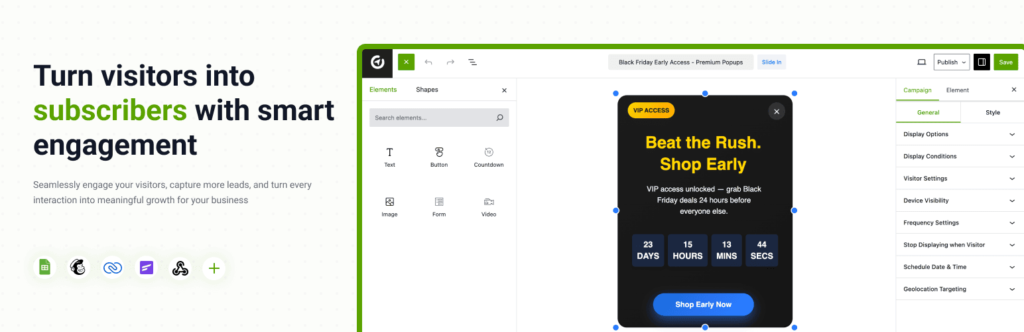
OptinCraft is a WordPress-focused popup builder designed to help ecommerce sites grow by creating smart, customizable popups using a drag-and-drop editor. It’s built as a practical solution for boosting engagement, signups, and conversions on online stores.
🛠️ Key Features
👉 Visual Popup Builder
- Drag-and-drop canvas with no coding required
- Supports text, images, buttons, timers, and more
- Fully responsive for mobile and desktop
👉 Multiple Popup Types
- Lightbox popups
- Floating bars
- Slide-in banners and sidebar popups
These formats let you match the popup style to your campaign goal, such as promotions or lead capture.
👉 Smart Targeting & Triggers
- Triggers based on page load, time delay, exit intent, or inactivity
- Device-specific display controls
- Page and behavior targeting options
👉 Ready Templates
- Pre-designed templates to launch faster
- Fully customizable to match your brand
👉 Analytics & Insights
- Built-in dashboard for tracking impressions, clicks, and conversions
- Helps compare campaigns and improve performance
👉 Integrations
- Works with WooCommerce and popular email marketing tools
- CRM and advanced integrations available in premium versions
🎯 Why It’s Useful for Ecommerce
Popups are commonly used to capture emails, promote offers, recover abandoning visitors, and drive more sales. OptinCraft simplifies this by giving merchants control over design, timing, and targeting so messages appear at the right moment.
In short, OptinCraft is a practical popup solution built for ecommerce growth, especially for WordPress store owners who want better conversions with minimal setup.
Final Thoughts
Share this blog:

About William Tan
William Tan is a Digital Marketer at Crafium, specializing in WordPress solutions and online growth strategies. He’s passionate about helping businesses expand their digital presence through smart marketing and data-driven insights.