Why Is Shopping Cart Abandonment a Problem for Retailers?

William Tan
William Tan is a Digital Marketer at Crafium,…
In this article
Shopping cart abandonment is one of the biggest challenges retailers face today, silently draining revenue and lowering conversion rates.
Many shoppers show intent to buy by adding products to their carts, yet most leave before checkout, creating a major gap between interest and action.
Every abandoned cart represents lost sales, wasted marketing spend, and missed chances to build loyal customers which can hurt long term growth.
In this article, we’ll explain why shopping cart abandonment is such a problem for retailers and how you can tackle it with smart strategies that recover sales and retain customers.
The Real Impact of Shopping Cart Abandonment
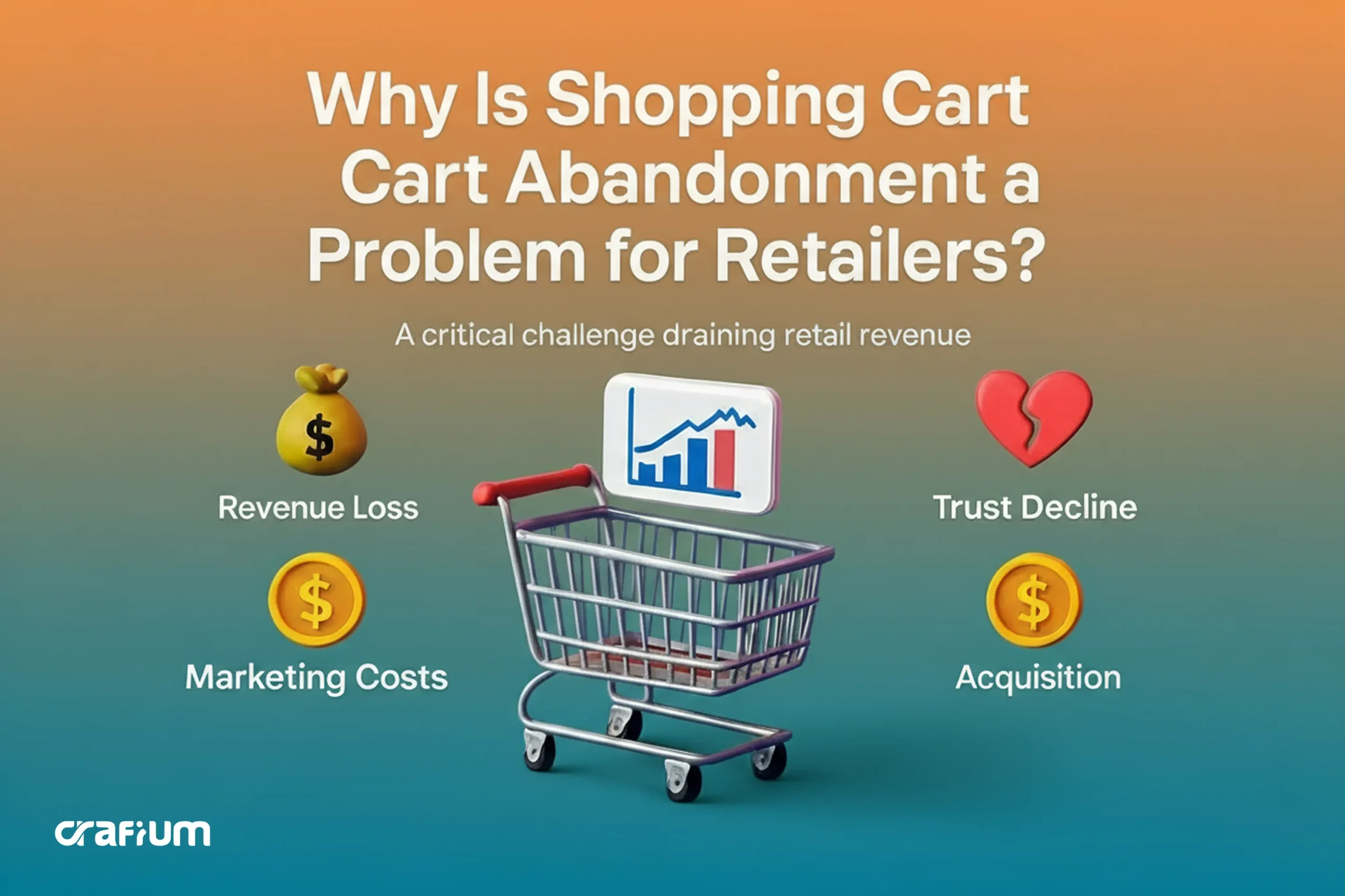
Shopping cart abandonment might seem like a simple missed sale, but its effects go much deeper. It influences your revenue, customer trust, and even the strength of your brand in the long run.
i. Loss of immediate revenue
Every abandoned cart represents potential profit slipping away. When shoppers show purchase intent but fail to complete it, your business not only loses direct sales but also wastes marketing spend used to attract that customer in the first place.
ii. Decline in customer trust and loyalty
High cart abandonment rates often point to deeper issues like confusing checkout processes, hidden costs, or lack of trust in payment security. When customers experience frustration or doubt, they’re less likely to return, affecting repeat purchases and long-term brand loyalty.
iii. Increased marketing and acquisition costs
Each abandoned cart drives up the cost per acquisition since you’re spending more to bring users back or attract new ones. This inefficiency stretches your marketing budget and reduces ROI, making it harder to scale profitably without addressing the underlying causes.
iv. Negative impact on brand perception
A complicated or unreliable checkout experience can hurt your brand’s reputation. Customers associate smooth transactions with professionalism and credibility, and when that’s missing, it can erode brand trust and lead to negative word of mouth.
v. Missed insights and optimization opportunities
Abandonment data is a goldmine of behavioral insights. Ignoring it means losing the chance to identify friction points, test solutions, and improve user experience. By analyzing why customers abandon carts, businesses can refine their strategies and boost conversions more effectively.
Common Reasons Shoppers Abandon Their Carts
Shoppers often abandon their carts for reasons that go beyond indecision. Understanding these causes helps businesses pinpoint friction and create a smoother, more trustworthy buying experience.
Unexpected extra costs
Hidden fees like shipping, taxes, or service charges often catch customers off guard. When the final price differs from what they expected, it creates frustration and prompts them to leave before completing the purchase.
Complicated checkout process
A lengthy or confusing checkout process discourages buyers. Too many form fields, mandatory account creation, or unclear steps can make customers lose patience and abandon their cart midway.
Lack of trust in payment security
If your site doesn’t appear secure or lacks trusted payment gateways, shoppers hesitate to share their financial information. Visible trust badges, SSL certificates, and transparent policies can help reduce this fear.
Limited payment or shipping options
When customers can’t find their preferred payment methods or shipping choices, they may look for alternatives elsewhere. Offering flexible options caters to different preferences and keeps potential buyers from leaving.
Slow website or technical issues
A sluggish website, broken links, or glitches during checkout can ruin the shopping experience. Shoppers expect speed and reliability, and even a few seconds of delay can lead them to abandon their purchase.
Distractions or second thoughts
Sometimes, shoppers abandon their carts simply because life gets in the way. A phone call, notification, or moment of hesitation can pause their purchase and without timely reminders, they might never return.
How Shopping Cart Abandonment Hurts Retailers
Shopping cart abandonment doesn’t just affect a single transaction — it has ripple effects that can impact a retailer’s overall performance. Understanding these consequences is crucial for turning potential losses into actionable insights.
1. Lost revenue opportunities
Every abandoned cart represents money that never reaches your business. High abandonment rates can significantly reduce sales, making it harder to achieve revenue goals even if traffic to your site is strong.
2. Wasted marketing and acquisition spend
Retailers invest heavily in attracting customers through ads, promotions, and campaigns. When shoppers abandon their carts, much of this investment goes to waste, reducing overall return on marketing efforts.
3. Lower customer lifetime value
Frequent abandonment can signal dissatisfaction or mistrust, which affects repeat purchases. When customers leave without buying, their potential lifetime value diminishes, impacting long-term profitability.
4. Damage to brand perception
A frustrating checkout experience can harm your brand’s reputation. Shoppers associate ease and reliability with professionalism, and repeated abandonment due to poor experience can lead to negative reviews or lost referrals.
5. Missed opportunities for optimization
Abandoned carts are a source of valuable behavioral data. Ignoring this information means missing chances to refine your website, improve the user experience, and implement strategies that could increase conversion rates over time.
Proven Strategies to Reduce Cart Abandonment
Reducing cart abandonment is essential for boosting conversions and maximizing revenue. By implementing the right strategies, retailers can guide shoppers smoothly from interest to purchase.
i. Simplify the checkout process
Make checkout quick and intuitive by minimizing form fields, offering guest checkout, and clearly showing progress steps. A simple process reduces friction and keeps shoppers engaged until the purchase is complete.
ii. Be transparent about costs
Display shipping, taxes, and fees upfront so customers aren’t surprised at the final step. Clear pricing builds trust and helps shoppers make confident purchase decisions.
iii. Offer multiple payment and shipping options
Provide a variety of payment methods and flexible shipping choices. Catering to different preferences ensures shoppers can complete their purchase without switching to competitors.
iv. Use cart abandonment emails
Send timely reminder emails to shoppers who leave items in their cart. Personalized messages with incentives like discounts or free shipping can encourage them to return and complete the purchase.
v. Display trust signals
Show security badges, SSL certificates, and clear return policies during checkout. Demonstrating that their information is safe reassures shoppers and increases the likelihood of completing the purchase.
vi. Optimize site speed and mobile experience
Ensure your website loads quickly and performs seamlessly on all devices. A fast, responsive site prevents frustration and keeps shoppers moving toward checkout.
vii. Provide real-time support
Live chat or chatbots during checkout can answer questions instantly and resolve concerns. Immediate assistance reduces hesitation and helps convert undecided shoppers.
Measuring and Improving Cart Recovery Performance
Tracking and improving cart recovery is key to turning abandoned carts into completed sales. Monitoring the right metrics helps retailers identify weak points and optimize their strategies for better results.
Track abandonment rates
Regularly monitor how many shoppers leave without completing a purchase. Identifying patterns by device, location, or product type helps pinpoint where improvements are needed.
Analyze customer behavior
Use analytics to understand why shoppers abandon carts. Look at click paths, time spent on pages, and exit points to uncover friction and areas for optimization.
Monitor recovery email effectiveness
Evaluate metrics like open rates, click-through rates, and conversion from cart recovery emails. Testing subject lines, messaging, and incentives ensures your emails drive maximum results.
Test and optimize checkout experience
Regularly A/B test checkout layouts, form fields, and calls to action. Continuous experimentation helps reduce friction, streamline the process, and increase conversion rates.
Evaluate promotions and incentives
Track how discounts, free shipping, or limited-time offers impact cart recovery. Analyzing effectiveness ensures you use incentives strategically without eroding profit margins.
Implement feedback loops
Collect feedback from customers who abandon carts to understand pain points directly. Surveys or post-abandonment prompts provide actionable insights for continuous improvement.
Measure overall ROI
Assess the revenue recovered versus the cost of implementing recovery strategies. This helps determine which tactics are most effective and sustainable for long-term growth.
Conclusion
Shopping cart abandonment is more than just missed sales; it’s a reflection of the shopper’s experience and trust in your brand. Each abandoned cart highlights friction points that, if left unaddressed, can quietly erode revenue, reduce customer loyalty, and weaken marketing efficiency.
By understanding why shoppers leave and implementing strategies to simplify checkout, provide transparency, and offer timely support, retailers can recover lost opportunities and strengthen their relationship with customers. Proactive cart recovery not only boosts conversions but also builds long-term trust and encourages repeat purchases.
Ultimately, addressing cart abandonment is about more than immediate revenue. It’s about creating a seamless, reliable shopping experience that turns interest into action, maximizing both customer satisfaction and business growth.
Share this blog:

About William Tan
William Tan is a Digital Marketer at Crafium, specializing in WordPress solutions and online growth strategies. He’s passionate about helping businesses expand their digital presence through smart marketing and data-driven insights.