Most businesses focus heavily on generating traffic, but traffic alone does not guarantee revenue. What truly drives sustainable growth is how effectively that traffic converts into leads, subscribers, or paying customers. This is where conversion rate optimization (CRO) becomes essential.
Conversion rate optimization techniques are strategies used to increase the percentage of website visitors who complete a desired action, such as making a purchase, signing up for a newsletter, or requesting a demo.
Instead of spending more on marketing to attract new visitors, CRO helps businesses maximize the value of existing traffic by improving user experience, optimizing landing pages, and removing friction from the conversion funnel.
Companies that implement strong CRO strategies often see significant improvements in revenue, lead generation, and customer engagement without increasing advertising budgets.
In this blog post, we’ll explore the most powerful conversion rate optimization techniques that drive real growth, including data-driven testing, UX improvements, persuasive design strategies, and conversion-focused content optimization.
What Is Conversion Rate Optimization (CRO)?
Conversion rate optimization (CRO) is the process of improving a website or landing page to increase the percentage of visitors who take a desired action. These actions may include:
- Purchasing a product
- Signing up for a newsletter
- Booking a demo
- Downloading a resource
- Creating an account
The conversion rate is calculated using a simple formula:
Conversions ÷ Total Visitors × 100
For example, if 1000 visitors come to your website and 50 of them make a purchase, the conversion rate is 5%.
CRO focuses on improving user experience, analyzing user behavior, and running experiments to determine what motivates visitors to convert.
Why Conversion Rate Optimization Matters for Business Growth
Businesses that ignore CRO often spend large budgets on traffic acquisition but fail to convert visitors effectively. Optimizing conversions provides several benefits:
- Higher ROI from existing traffic
- Lower customer acquisition costs
- Improved user experience
- Better marketing efficiency
- Higher revenue without increasing ad spend
For startups and SaaS companies, CRO can be the fastest way to scale revenue without dramatically increasing marketing budgets.
15 Conversion Rate Optimization Techniques That Drive Real Growth
1. Optimize your website for page speed
Page speed has a direct impact on conversions. Studies show that even a one-second delay can reduce conversions significantly.
Slow websites create friction and cause users to abandon pages before taking action. Improving load speed through optimized images, caching, and performance improvements can dramatically increase conversion rates.
Fast websites also improve SEO rankings and user engagement.
2. Use clear and compelling calls to action
A strong call-to-action (CTA) is one of the most important elements of conversion optimization.
Effective CTAs should:
- Be visually prominent
- Use action-driven language
- Communicate clear value
- Reduce hesitation
Examples of strong CTAs include:
- Start Your Free Trial
- Get Instant Access
- Join the Waitlist
- Book a Demo
The goal is to make the next step obvious and irresistible.
3. Improve landing page design
Landing pages should be designed specifically to guide users toward conversion.
Key elements of high-converting landing pages include:
- Clear headline
- Strong value proposition
- Minimal distractions
- Visual hierarchy
- Social proof elements
A focused landing page dramatically increases the chances of converting visitors into customers.
4. Use A/B testing for continuous improvement
A/B testing is one of the most powerful CRO strategies.
It involves testing two variations of a page element to determine which performs better. Common A/B testing elements include:
- Headlines
- Call-to-action buttons
- Images
- Pricing layouts
- Page layouts
Even small improvements discovered through testing can produce significant conversion gains over time.
5. Reduce form friction
Long and complicated forms reduce conversions dramatically.
To improve form completion rates:
- Ask only essential information
- Use autofill features
- Break long forms into steps
- Show progress indicators
Simplifying forms removes friction and encourages more users to complete the conversion process.
6. Add social proof and trust signals
Visitors are more likely to convert when they trust your brand.
Adding social proof can significantly increase conversions. Examples include:
- Customer testimonials
- Case studies
- User reviews
- Trust badges
- Customer logos
Social proof reassures visitors that others have successfully used your product or service.
7. Personalize user experiences
Personalization helps create more relevant experiences for visitors.
Examples include:
- Location-based messaging
- Behavior-based recommendations
- Personalized product suggestions
- Dynamic landing pages
Personalized experiences make users feel understood, which increases engagement and conversions.
8. Optimize mobile user experience
Mobile traffic now accounts for the majority of web visits.
Poor mobile experiences often result in high bounce rates and low conversions.
Mobile optimization should include:
- Responsive design
- Fast loading speeds
- Simplified navigation
- Mobile-friendly forms
Mobile CRO is essential for capturing modern audiences.
9. Use exit-intent popups strategically
Exit-intent popups detect when users are about to leave the website and display targeted offers.
Common offers include:
- Discount codes
- Free resources
- Email signup incentives
When used strategically, exit popups can recover a large percentage of abandoning visitors.
10. Improve website navigation
Confusing navigation creates friction in the user journey.
Clear navigation helps visitors quickly find what they are looking for, improving engagement and conversion rates.
Simplified navigation structures typically outperform complex menu systems.
11. Highlight your unique value proposition
Visitors should immediately understand why they should choose your product or service.
Your value proposition should answer three key questions:
- What do you offer
- Who is it for
- Why is it better than alternatives
A strong value proposition significantly increases conversion potential.
12. Use visual hierarchy to guide attention
Strategic design helps guide visitors toward important elements.
Use visual hierarchy techniques such as:
- Color contrast
- Spacing
- Font size
- Directional cues
These design techniques naturally lead users toward conversion actions.
13. Analyze user behavior with heatmaps
Heatmaps help identify how users interact with your website.
They reveal:
- Where users click
- Where they scroll
- Where they abandon pages
Understanding user behavior allows businesses to optimize pages based on real data.
14. Create urgency and scarcity
Urgency motivates users to take action quickly.
Examples include:
- Limited-time offers
- Countdown timers
- Low stock indicators
- Early access offers
These psychological triggers can significantly increase conversion rates.
15. Optimize your conversion funnel
A conversion funnel represents the journey from visitor to customer.
Analyzing each stage helps identify drop-off points.
Improving funnel performance may involve:
- Simplifying checkout processes
- Reducing page steps
- Improving onboarding experiences
Optimized funnels lead to higher overall conversion rates and better customer experiences.
Supercharge Your Conversions with OptinCraft
Even with the best conversion rate optimization strategies in place, capturing visitor attention at the right moment can be challenging. This is where OptinCraft becomes a powerful CRO asset for marketers, SaaS founders, and ecommerce businesses looking to turn more visitors into leads and customers.
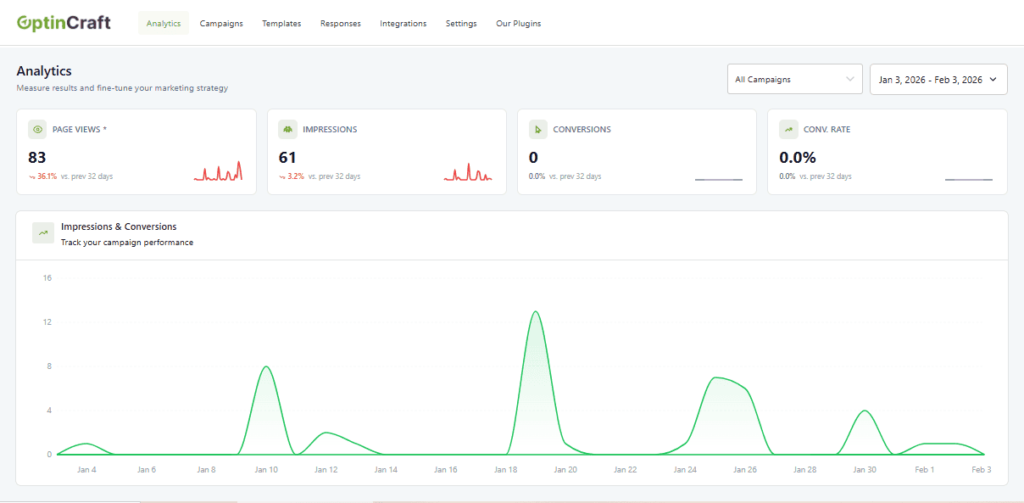
OptinCraft is designed specifically to help websites convert passive visitors into engaged subscribers and buyers through smart, behavior-driven opt-in campaigns. Instead of using generic popups that often annoy users, OptinCraft focuses on intent-based triggers, personalized offers, and conversion-focused design that aligns perfectly with modern CRO principles.
One of the biggest reasons businesses struggle with conversions is timing. Visitors often leave a site without taking action simply because they were not presented with the right offer at the right moment. OptinCraft solves this problem by allowing you to create highly targeted campaigns based on user behavior, such as exit intent, time on page, scroll depth, or specific page visits. This ensures your offers appear exactly when visitors are most likely to convert.
Another advantage of OptinCraft is its conversion-focused campaign builder. Marketers can quickly design popups, slide-ins, floating bars, and lead capture forms that integrate seamlessly with their website design. These elements are optimized to guide visitors toward clear calls-to-action like joining a newsletter, downloading a resource, or claiming a limited-time offer.
OptinCraft also plays a major role in reducing bounce rates and recovering abandoning visitors. Exit-intent campaigns allow you to present last-chance offers such as discount codes, lead magnets, or waitlist invitations before users leave the page. This single strategy can recover a significant percentage of otherwise lost traffic.
Beyond lead capture, OptinCraft helps businesses build stronger marketing funnels. By capturing emails and segmenting audiences based on behavior, marketers can nurture leads through personalized email campaigns, product recommendations, and exclusive offers that move users further down the conversion funnel.
For companies focused on sustainable growth, OptinCraft becomes more than just a popup tool—it acts as a conversion engine that continuously transforms website traffic into qualified leads and loyal customers. When combined with the CRO techniques discussed in this guide, tools like OptinCraft can dramatically increase conversion rates without requiring additional advertising spend.
If your goal is to maximize the value of every website visitor and build a high-performing conversion funnel, implementing OptinCraft can be one of the smartest CRO investments you make.
Conclusion
Conversion rate optimization is one of the most powerful strategies for achieving sustainable online growth. Instead of constantly investing in new traffic, CRO focuses on maximizing the value of existing visitors.
By implementing proven techniques such as A/B testing, landing page optimization, user experience improvements, and data-driven personalization, businesses can significantly increase conversions and revenue.
The companies that win in digital marketing are not always the ones with the most traffic. Instead, they are the ones that convert their visitors most effectively.
Frequently Asked Questions (FAQs)
What is a good website conversion rate?
Most industries see average conversion rates between 2% and 5%, but optimized websites can reach much higher rates.
How can I improve my website conversion rate?
You can improve conversion rates by optimizing landing pages, improving CTAs, using A/B testing, and enhancing user experience.
What are the best CRO tools?
Popular CRO tools include heatmap software, A/B testing platforms, analytics tools, and user behavior tracking software.
What is A/B testing in CRO?
A/B testing compares two versions of a webpage to determine which version generates higher conversions.
How does page speed affect conversion rates?
Faster websites improve user experience and reduce bounce rates, which increases conversions.
What is a conversion funnel?
A conversion funnel represents the journey users take from visiting a website to completing a desired action.
What are micro conversions?
Micro conversions are smaller actions that indicate user engagement, such as newsletter signups or account registrations.
How does UX design impact conversions?
Good UX design reduces friction and makes it easier for users to complete desired actions.
What role does social proof play in CRO?
Social proof builds trust and encourages visitors to convert by showing that others have already used and trusted the product.
How can personalization improve conversions?
Personalized experiences deliver relevant content and offers, increasing engagement and conversions.
What are exit-intent popups?
Exit-intent popups appear when users are about to leave a page, offering incentives to keep them engaged.
What is the biggest CRO mistake businesses make?
One of the biggest mistakes is making changes without analyzing user behavior or running tests.
How long does CRO take to show results?
Results vary depending on traffic volume and testing frequency, but improvements often appear within weeks.
What is mobile conversion optimization?
Mobile CRO focuses on improving conversions specifically for mobile device users.
How does trust impact conversions?
Trust signals like reviews, testimonials, and security badges make visitors more comfortable completing transactions.
What is behavioral targeting in CRO?
Behavioral targeting uses visitor actions and data to display relevant content or offers.
Can CRO increase revenue without more traffic?
Yes, CRO improves revenue by converting more existing visitors into customers.
Is CRO only for ecommerce websites?
No, CRO benefits SaaS platforms, service businesses, lead generation sites, and content websites.