Why Local Currency Is Becoming a Trust Signal

William Tan
William Tan is a Digital Marketer at Crafium,…
In this article
Not long ago, convenience ruled everything.
The cheapest price. The fastest shipping. The biggest marketplace.
But something has shifted.
Today, more people are choosing the neighborhood bakery over the mega-retailer. The farmers market over the supermarket app. The local gift card over a generic prepaid card. It’s not always cheaper. It’s rarely faster.
Yet it feels better and safer.
Underneath this shift is a subtle but powerful idea: local currency has become a trust signal.
How we pay is starting to say just as much as what we buy.
The Growing Trust Problem in Modern Commerce
Modern commerce has never been faster or more convenient.
With a few taps, you can order almost anything from anywhere in the world and have it delivered to your door within days, sometimes hours. Marketplaces have removed friction, expanded choice, and driven prices down.
But something important got lost along the way: trust.
When you buy from a local store, you usually know who you’re dealing with. You can walk back in if something breaks. You recognize the staff. There’s a shared sense of accountability.
Online, that connection disappears.
Instead, you’re often dealing with:
- sellers you’ve never heard of
- storefronts with no real-world presence
- products shipped through multiple middlemen
- reviews that may or may not be real
If something goes wrong, responsibility gets blurry. Was it the seller, the platform, the shipper, or the manufacturer? Getting help can feel like navigating a maze of automated responses and fine print.
At the same time, stories of scams, counterfeit goods, dropshipping schemes, and vanishing vendors have made buyers more cautious.
Even legitimate businesses suffer because consumers now approach unfamiliar sellers with skepticism by default.
Convenience, it turns out, doesn’t automatically create confidence.
In fact, the more global and anonymous commerce becomes, the more people start craving the opposite: businesses they can recognize, places they can visit, and transactions that feel grounded in the real world.
Because when everything is distant and digital, trust becomes harder to verify and far more valuable.
That growing trust gap is exactly why local alternatives are starting to stand out.
What Counts as Local Currency?
When people hear the term “local currency,” they often imagine something unusual, maybe a town printing its own paper money.
But local currency doesn’t have to be that literal.
In practice, it refers to any payment method designed to circulate within a specific community rather than flow straight into distant, national, or global systems.
The goal isn’t to replace traditional money. It’s to keep economic activity closer to home and strengthen relationships between buyers and sellers.
That can take many forms, including:
- community vouchers or town tokens
- farmers market credits
- neighborhood gift cards
- store credits or prepaid balances
- local loyalty points
- regional payment apps or wallets
- cooperative or member-based currencies
For example, many farmers markets issue tokens that can be spent only with local vendors. Independent shops sell branded gift cards that encourage customers to return.
Some communities even create digital wallets that work exclusively with nearby businesses.
These systems may look small compared to national currencies, but their impact is meaningful. Because the money can only be used locally, it naturally supports local merchants, workers, and services.
Instead of disappearing into a vast corporate network, it recirculates within the same streets and neighborhoods.
Just as importantly, local currency makes commerce feel more personal. When you pay with something tied directly to your community, the transaction feels less abstract.
You’re not just spending money; rather, you’re participating in a local economy you can actually see.
That visibility is what gives local currency its power. It turns payment into a signal: this business is here, accountable, and invested in the same place you are.
Why Local Currency Is Becoming a Trust Signal
Trust doesn’t usually come from spreadsheets or policies.
It comes from signals.
Small cues that tell us: this is safe, this is familiar, this is accountable.
Local currency works because it sends those signals almost instantly. Even before we analyze the details, something about paying locally feels more grounded and reliable than sending money to an anonymous seller hundreds or thousands of miles away.
Here’s why.
1. Proximity creates accountability
Distance weakens responsibility. Proximity strengthens it.
When a business operates in your neighborhood, it can’t easily disappear after a bad transaction. You know where it is. You might pass it every day. You might even know the owner’s name.
That visibility changes behavior.
Local businesses depend heavily on repeat customers and word of mouth. A single negative experience can ripple through the community quickly.
Because the social and reputational stakes are higher, accountability is built in.
Paying with a local currency reinforces that connection. It says: this business is part of your everyday world—not hiding behind a screen.
2. You can see where the money goes
One of the biggest frustrations with modern commerce is opacity. Once you pay, your money vanishes into a complex chain of platforms, processors, warehouses, and corporations.
With local systems, the path is clearer.
You can often see the direct effects:
- the café hires another barista
- the bookstore hosts more events
- the market expands
- the neighborhood improves
The link between spending and impact becomes tangible.
That transparency makes people feel more confident, because they understand who benefits from their purchase.
3. Familiarity reduces perceived risk
Humans are wired to trust what feels familiar.
A recognizable storefront. A logo you’ve seen around town. Staff you’ve interacted with before. These details lower our mental defenses without us even realizing it.
Local currency taps into that psychology. It feels closer to home, both literally and emotionally.
Compare the difference:
Sending money to an unknown online seller
vs.
Using a neighborhood gift card at a shop you walk past every week
One feels abstract. The other feels safe.
That emotional comfort plays a huge role in trust.
4. Fewer middlemen, fewer things that can go wrong
Every extra layer in a transaction introduces more complexity and more chances for problems.
Global commerce often involves:
- multiple vendors
- payment processors
- third-party logistics
- customer service platforms
When something breaks, it’s hard to know who’s responsible.
Local currency systems tend to be simpler. You’re dealing directly with the business. If there’s an issue, you talk to a real person who can fix it.
Less friction. Less confusion. More confidence.
5. It signals commitment
Perhaps most importantly, accepting local currency signals something deeper: commitment.
A business that participates in a local payment system is saying, we’re invested here. They’re not just extracting revenue but they’re tied to the community’s success.
That shared stake builds mutual trust.
Customers feel like they’re supporting someone who will still be around tomorrow.
And stability is one of the strongest trust signals there is.
Technology Is Making Local Easier
For a long time, “local” came with a trade-off.
If you wanted to support neighborhood businesses, you often had to accept a little inconvenience. Payments might be cash only. Loyalty programs were paper punch cards. Systems felt clunky and limited compared to the smooth experience offered by large online platforms.
Meanwhile, big tech companies built frictionless payments, one-click checkouts, and instant transfers that made global commerce feel effortless.
It seemed like convenience belonged to the giants.
But that gap is closing fast.
Today, the same technology that once powered massive marketplaces is giving small, local businesses the tools to compete and sometimes even outperform on experience.
Simple payments without heavy infrastructure
Modern payment tools have dramatically lowered the barrier to entry.
A small shop no longer needs expensive hardware or complicated setups to accept digital payments. With just a smartphone or tablet, a business can process tap-to-pay transactions, scan QR codes, accept mobile wallets, and manage digital credits or gift cards.
What once required a bank-level system can now be set up in an afternoon.
This makes it possible for even the smallest vendors, from market stalls to family-run stores, to participate in modern commerce without losing their local identity.
Digital wallets keep money in the community
Local currencies no longer have to be paper vouchers or physical tokens.
They can live inside apps and digital wallets.
Communities can create systems where customers load funds once and spend only with participating neighborhood businesses. Store credits, loyalty points, and local gift cards can be tracked automatically and redeemed seamlessly.
The experience feels just as smooth as any national payment app, but the money stays circulating locally.
That combination is powerful. You get high-tech convenience with small-town trust.
Loyalty and relationships, not just transactions
Technology also allows local businesses to deepen relationships rather than simply process payments.
Instead of generic rewards, shops can offer personalized discounts, birthday perks, member-only events, and shared loyalty points that work across multiple local stores.
These features make spending feel more interactive and human.
Large platforms often optimize for volume. Local systems can optimize for connection.
And connection is what builds trust.
Collaboration becomes easier
Digital tools make it simpler for local businesses to work together.
A café, bookstore, and florist can share a single neighborhood gift card or rewards program. Customers earn value wherever they shop locally, not just at one store.
What used to be complicated and expensive is now mostly software.
The result is a small but interconnected ecosystem that feels cohesive and community-driven rather than fragmented.
Local no longer means old-fashioned
Perhaps the biggest shift is perception.
Local used to imply slower, less efficient, or outdated.
Now it can mean just as fast and seamless as anything else, but more personal.
You can tap your phone to pay at the corner store, reload a neighborhood wallet instantly, or send a digital gift card to a friend across town.
The experience feels modern, yet the relationship stays human.
In other words, technology hasn’t replaced local commerce.
It has finally caught up to it.
By removing friction and simplifying payments, tech has made it possible for communities to combine the best of both worlds. The ease of digital systems and the trust that comes from staying close to home.
What Businesses Gain
For businesses, local currency systems aren’t just nice branding. They’re practical tools.
They encourage:
- repeat visits
- stronger loyalty
- higher lifetime customer value
- word-of-mouth referrals
- deeper emotional connection
When customers feel like their money supports the neighborhood, they’re less likely to switch for a tiny discount elsewhere.
Price becomes less important. Relationship becomes more important.
That’s powerful.
What Consumers Gain
Consumers benefit too.
They get:
- better service
- easier accountability
- stronger community ties
- more meaningful spending
- confidence about where their money goes
Buying stops feeling like a faceless transaction and starts feeling like participation.
It’s not just commerce. It’s connection.
But It’s Not Perfect
Local currency isn’t a cure-all.
It has limits:
- you can’t always use it everywhere
- systems may not scale easily
- regulations can complicate things
- it complements national money rather than replaces it
Still, perfection isn’t the goal.
Trust is.
And for many people, local options simply feel safer and more reliable.
The Bigger Idea: Trust Is the Real Currency
At its core, this shift isn’t really about money.
It’s about confidence.
In a world flooded with choices, scams, and distant corporations, people are searching for signals that say:
“You’re safe here.”
Local currency has quietly become one of those signals.
It tells customers:
- we’re nearby
- we’re visible
- we’re accountable
- we’re part of your world
That message often matters more than speed or price.
Because when trust is scarce, people pay attention to anything that proves it.
How X-Currency Helps Stores Build Trust With Localized Pricing
If trust is the foundation of modern commerce, then one of the fastest ways to lose it is simple: show customers the wrong currency.
Nothing creates hesitation faster than forcing shoppers to mentally convert prices or guess what they’ll actually be charged at checkout.
That friction feels risky.
And when payments feel risky, trust drops.
That’s where X-Currency comes in.
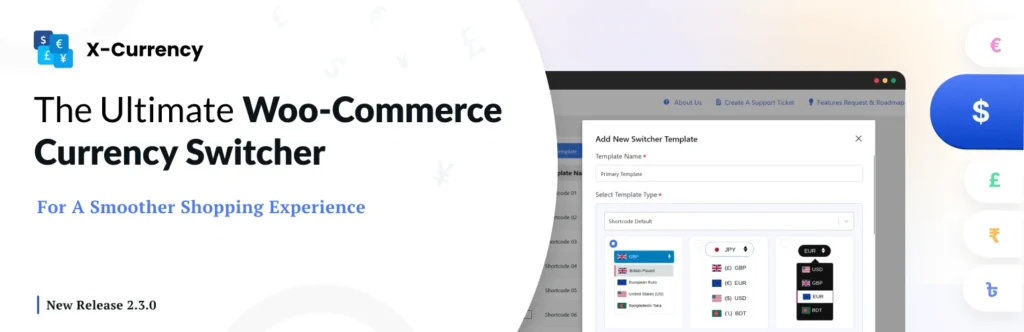
X-Currency is a WooCommerce currency switcher plugin that lets online stores automatically display prices and accept payments in a shopper’s preferred currency. Instead of making customers adapt to the store, the store adapts to the customer.
That small shift makes the buying experience feel more local, familiar, and trustworthy.
Key features
• Multi-currency switching with unlimited currencies
• Custom currency creation including crypto or regional currencies
• Automatic exchange rate updates
• Geo-IP detection to show visitors prices in their local currency
• Currency-specific product pricing
• Currency-specific shipping rates
• Currency-specific coupon values
• Currency-based payment gateway control
• Approximate price display across shop, cart, and checkout
• Ready-made switcher templates with flags, dropdowns, and sticky styles
• Shortcode and block support for easy placement anywhere on the site
• Full design customization with CSS options
Why this matters for trust
These features do more than change numbers on a page. They reduce uncertainty.
When customers see prices in their own currency, they immediately understand the cost. There’s no mental math, no hidden conversions, and no surprises at checkout.
That clarity creates confidence.
It also signals professionalism. A store that speaks the customer’s currency feels more accessible and more credible. It shows the business has considered their needs, not just its own.
In other words, while local currencies build trust in physical communities, tools like X-Currency help online stores create the same sense of familiarity and comfort in a global marketplace.
And in ecommerce, that familiarity can be the difference between hesitation and a completed purchase.
Conclusion
As commerce becomes more digital and global, trust has become harder to hold onto. Anonymous sellers and distant platforms often make transactions feel uncertain, leaving people wondering who’s really behind the purchase.
Local currency offers a simple alternative by keeping money close to home and tying spending to businesses that are visible, familiar, and accountable.
That’s why local currency has become more than just a way to pay. It’s a signal of reliability and connection.
Share this blog:

About William Tan
William Tan is a Digital Marketer at Crafium, specializing in WordPress solutions and online growth strategies. He’s passionate about helping businesses expand their digital presence through smart marketing and data-driven insights.